Your Cart is Empty



ESSENTIAL THE BEGINNING - LARGE BREED is specifically formulated for puppies and juniors with an expected ADULT weight of 15kg and above.
The meal is developed to perfectly support this specific sensitive growth stage that bigger dogs go through. LARGE BREED follows our BOF principle and even grain-free.
Our Luxury Puppy Large Breed Dog Food costs on average under €1 a day to feed.
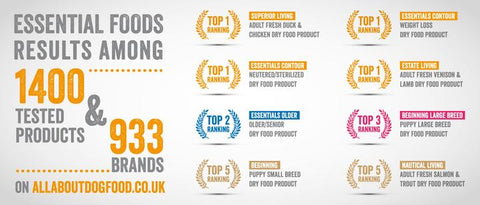
But don't just take our word for it, check out our rating on https://www.allaboutdogfood.co.uk/dog-food-reviews/1330/essential-the-beginning-large-breed . Essentials Large Breed Rated 3rd out of 1400 tested products and 933 brands, pretty good no?
Still not convinced, check out our reviews on Trust Pilot

I was told that the puppy food we were feeding our Doberman was only from chicken derivatives and not from actual meat and was horrified. I was on a mission to find something good for her and after many searches and comparisons I came across Essentials and it shone out as one of the best. I am not sorry, we thought our puppy looked great but after being on the large breed puppy she shines with health and she absolutely loves it too. Would recommend to anyone who wants something fantastic for their best friend.
 Julia
Julia
I found out about essential foods from allaboutdogfood.co.uk when I was looking to change my cocker spaniel puppy from the kibble she had been on at her breeder to a better quality kibble. I was impressed with the high rating yet affordable price compared to the other kibbles with the same rating. She did really well on ‘the beginning’ and when it was time to move onto adult food I moved her onto the highland kibble. She looks amazing on it, people always comment on how shiny her coat is and it definitely helps to keep her in tip top condition for her agility training. Quick delivery too!
 Joe Hayes
Came across this food when searching for a better food that I could feed both of our dogs as they were on different types of food. I found this on allaboutdogfood.co.uk. Our labrador will eat anything but the border collie would pick at food and 'take it or leave it'. Not any more, they both wolf this food down! They enjoy it more, their coats are shinier, the labrador has lost weight. Another bonus is that, to be blunt, no more stinky farts! Literally none! I had assumed that was just part of owning a labrador! It is so clear that this food is so much better for them than their previous brands and not much more expensive. Cannot recommend it highly enough.
https://uk.trustpilot.com/review/essentialfoodsgb.co.uk?utm_medium=trustbox&utm_source=MicroCombo
Want more information, look at our ingredients list which is only sourced from the highest quality meats,fish,fruit and vegetables.
Made with fresh and dried chicken, duck, salmon, trout, egg 74%
Of which is fresh 48%
Protein 28%
Fat 16%
Minerals/crude ash 7.5%
Fiber 3.5%
Water 8.5%
Omega6 1.5%
Omega3 1.5%
Calcium 1.4%
Phosphorus 1.2%
Glucosamine 0.09%
Chondroitin 0.07%
Kcal/Kg 3620.0
 Wendy
Wendy