Your Cart is Empty
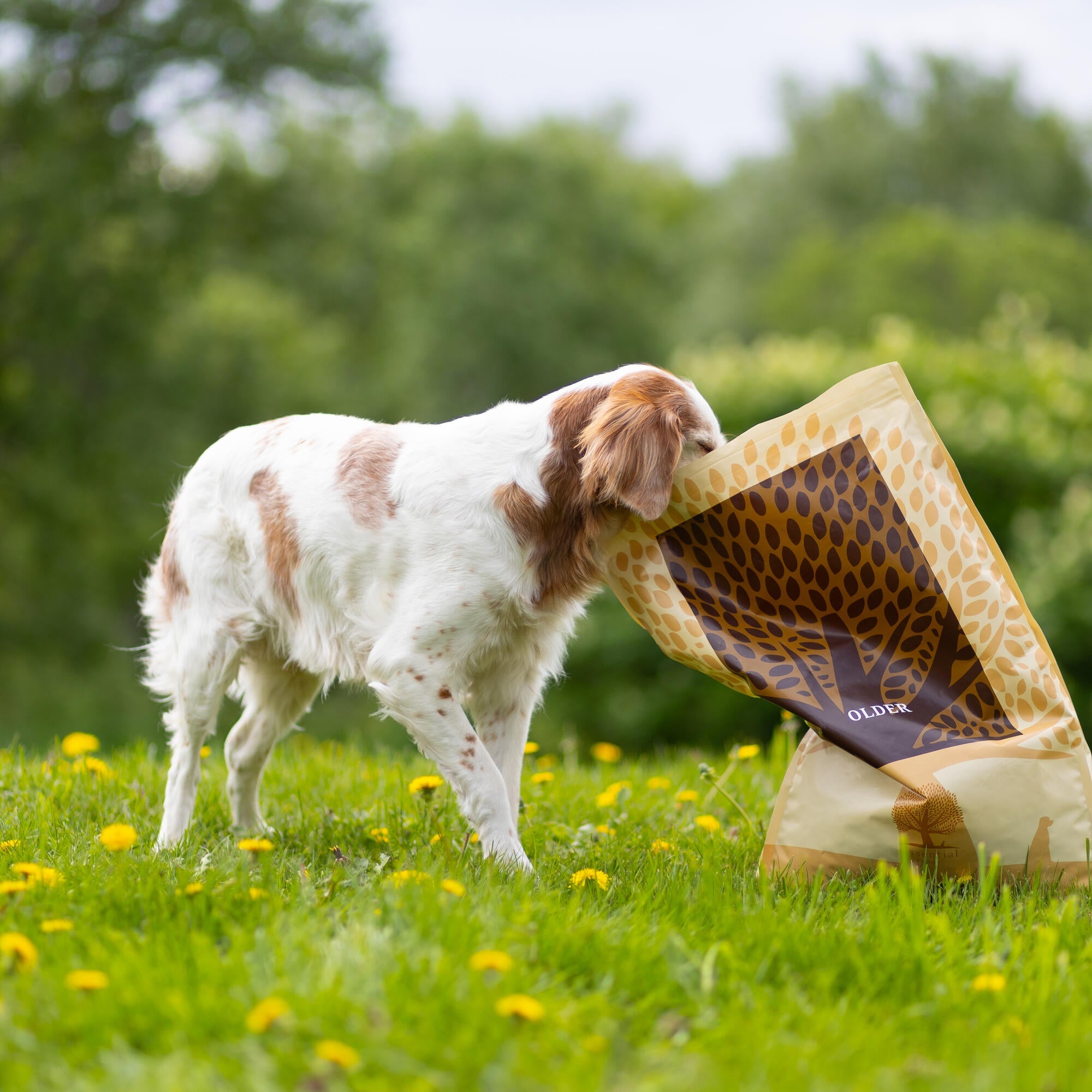
Feeding your senior dog the right way is crucial to maintaining their health and well-being as they age. Older dogs have different nutritional needs compared to younger ones. This article will guide you on how often a senior dog should eat and the best types of food to support their health.
As dogs age, their metabolism slows down, and they may become less active. This means that their dietary needs change. Providing a consistent feeding schedule helps maintain their energy levels and prevents obesity, which is a common issue in older dogs. So, how many times a day should a senior dog eat?
Most veterinarians recommend feeding senior dogs two to three times a day. This feeding schedule helps to keep their energy levels stable throughout the day. Splitting their meals into smaller portions also aids digestion, which can become slower with age.
Starting the day with a balanced meal is essential for senior dogs. A morning meal can boost their energy levels and prepare them for any activity throughout the day. Ensure that this meal includes high-quality senior dog food, preferably natural dog food with high protein content.
An afternoon meal helps maintain your dog's energy and keeps them satisfied. If your dog is particularly active during the day, a second meal is crucial to sustain their energy. This meal should be easy to digest and may include grain-free dog food, which is gentle on their digestive system.
An evening meal helps your senior dog wind down after a day of activity. This meal should be light but nutritious, helping them feel full without overeating. Consider feeding them natural dog food that is rich in omega-3 fatty acids, which support joint health and reduce inflammation.
Selecting the right food for your senior dog is just as important as determining how often they eat. Senior dogs benefit from diets that are high in protein, contain no grains, and are rich in omega-3 fatty acids. Such diets support muscle maintenance, joint health, and overall vitality.
Natural dog food is an excellent choice for senior dogs as it typically contains fewer artificial additives and fillers. This means your dog gets more of the nutrients they need without the unnecessary extras. Look for natural dog food with high-meat content to ensure your dog gets the protein they need to maintain muscle mass.
Many senior dogs develop sensitivities to grains as they age. Grain-free dog food can be easier on their digestive system and help prevent issues like bloating and discomfort. Additionally, grain-free options often have a higher protein content, which is essential for maintaining your dog's muscle mass.
Older dogs need special care when it comes to their diet. The best diet for senior dogs includes natural dog food, grain-free dog food, and meals that are high in protein and omega-3 fatty acids. These diets offer benefits like improved joint health, better digestion, and enhanced overall vitality. Feeding your senior dog two to three times a day ensures they receive the necessary nutrients while maintaining a healthy weight.
In conclusion, the key to keeping your senior dog healthy and happy lies in the right diet and consistent feeding schedule. Opt for high-quality, senior dog food that meets their nutritional needs, and you’ll see them thrive in their golden years
Senior dogs — generally those over 7 years — have different dietary requirements to younger dogs. Their metabolism slows, joints need extra support, and their digestive systems become less efficient. A diet that worked well at 3 years old may not be optimal at 9.
Essential Foods Ireland's grain-free formulas are highly digestible and free from the cheap fillers that put unnecessary strain on ageing systems. Use our Dog Food Calculator for senior-specific portion guidance, or browse the range — delivered across the Republic of Ireland and Northern Ireland.
Looking for the best dog food for older dogs in Ireland? This guide covers what senior dogs need, what to avoid, and which grain-free formulas are best for dogs aged 7 and above.
