Your Cart is Empty
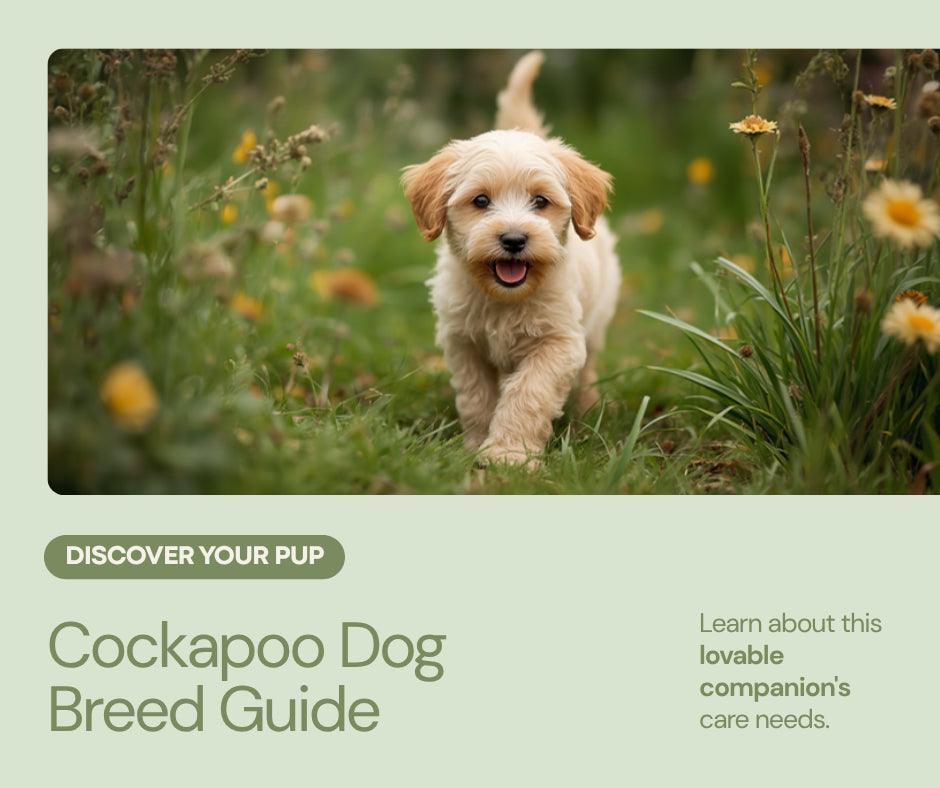
The Cockapoo has become one of Ireland’s most popular dogs — and it’s not hard to understand why. A cross between the Cocker Spaniel and the Poodle, the Cockapoo combines the best of both worlds: the Cocker’s gentle affection and the Poodle’s intelligence and low-shedding coat. They’re charming, adaptable, and brilliant with families. But Cockapoos can also carry the health sensitivities of both parent breeds, making nutrition an important consideration for every Irish Cockapoo owner.
This guide covers everything you need to know about feeding your Cockapoo in Ireland, from breed-specific health issues to the best food choices and portion guidance at every life stage.
The Cockapoo is one of the oldest designer crossbreeds, first bred deliberately in the United States in the 1950s. The combination of Cocker Spaniel and Poodle genetics produces a dog with a wide range of sizes — from miniature (under 6 kg) to standard (up to 11+ kg) — and a coat that can range from loose waves to tight curls, usually with minimal shedding.
Size: 5–11+ kg depending on parentage (Miniature, Toy, or Standard Poodle parent)
Lifespan: 12–15 years
Temperament: Playful, affectionate, sociable, and people-oriented. Cockapoos thrive on human company and are prone to separation anxiety if left alone for extended periods.
Energy level: Moderate to high. Cockapoos need daily walks and play sessions, but their exercise requirements are manageable for most Irish families.
In Ireland, Cockapoos have become enormously fashionable over the past decade, appearing in homes across the country — from Dublin suburbs to Connaught countryside. Their low-shedding coats are particularly appealing to families with mild allergies.
As a crossbreed, Cockapoos can inherit health tendencies from both parent breeds. Understanding these helps you make informed dietary and care decisions.
Ear infections: This is one of the most common recurring health issues in Cockapoos. Their floppy ears and dense, curly hair around the ear canal trap moisture and restrict airflow — creating the perfect environment for bacterial and yeast infections. Diet plays a significant role: food intolerances and grain sensitivities can increase systemic inflammation, making ear infections more frequent and harder to resolve. Many owners see a marked reduction in ear infections after switching to a grain-free diet.
Luxating patella (slipping kneecap): Both Cocker Spaniels and Poodles can carry a predisposition to luxating patella, where the kneecap slips out of position. While this is primarily a structural issue, maintaining a healthy weight reduces the mechanical stress on knee joints and can significantly affect prognosis.
Food sensitivities and skin issues: Cockapoos can develop food-related sensitivities that manifest as itchy skin, recurring ear problems, paw licking, or digestive upset. Both parent breeds carry tendencies toward food intolerances, and the combination can make Cockapoos particularly reactive to grain-heavy or highly processed foods.
Progressive Retinal Atrophy (PRA): Inherited from the Cocker Spaniel and Poodle lines, PRA causes gradual loss of vision. While dietary intervention cannot prevent genetic eye conditions, a diet rich in antioxidants (vitamin E, lutein, beta-carotene) supports general eye health.
Hereditary cataract: Again inherited from parent breeds, cataracts can develop in younger Cockapoos. Regular vet checks are important; antioxidant-rich nutrition supports ocular health.
Cockapoos are small-to-medium dogs with moderate-to-high energy levels and sensitive systems that respond well to high-quality nutrition. Key dietary priorities include:
Quality animal protein: The foundation of every Cockapoo’s diet should be real, named animal protein — chicken, salmon, turkey, duck, or lamb listed as the first ingredient. Protein supports lean muscle, healthy coat and skin, and immune function. Look for at least 28% protein in your chosen food.
Omega-3 and omega-6 fatty acids: Particularly important for a breed prone to skin sensitivities and coat issues. Fish oil, flaxseed, and salmon are excellent sources of omega-3s that reduce inflammation and keep the Cockapoo’s characteristic coat looking its best.
Clean, limited ingredients: Given the tendency toward food sensitivities, simpler ingredient lists with fewer potential allergens are preferable. Avoid foods with long lists of artificial colours, flavours, or preservatives.
Digestive support: Prebiotics, probiotics, and easily digestible carbohydrate sources support gut health and reduce the digestive sensitivity that some Cockapoos experience.
Calorie-appropriate portions: Cockapoos can become overweight if overfed — which puts additional strain on already-vulnerable knees. Choose a calorie-dense, nutrient-packed food and measure portions carefully.
For the majority of Cockapoos, a grain-free dog food is the most sensible choice. Both Cocker Spaniels and Poodles can develop food sensitivities, and common grains like wheat and corn are among the most frequent triggers. When these are removed from the diet, many Cockapoos experience fewer ear infections, less skin itching, better coat condition, and improved digestion.
Grain-free foods replace these difficult-to-digest grains with gentler carbohydrate sources such as sweet potato, peas, or lentils, which provide sustained energy without the inflammatory response that grains can provoke in sensitive individuals.
If your Cockapoo has recurring ear infections or skin issues, switching to grain-free food — alongside regular ear cleaning — is one of the most impactful dietary changes you can make. Many Irish Cockapoo owners have found this combination dramatically reduces the frequency of vet visits for ear problems.
Portion sizes for Cockapoos vary significantly based on their size, which depends on whether they have a Toy, Miniature, or Standard Poodle parent. Use these general guidelines as a starting point, always cross-referencing with the feeding guide on your chosen food:
Cockapoo puppies (8–16 weeks): 3–4 small meals per day. Small and medium breed puppy formulas are appropriate. Puppy food provides the extra protein and calories needed for growth.
Cockapoo puppies (4–12 months): 3 meals per day, moving to 2 meals at around 6 months. Transition to adult food at 10–12 months.
Adult miniature Cockapoos (5–6 kg, 1–7 years): Approximately 90–120 g of dry food per day, split into two meals.
Adult standard Cockapoos (9–11 kg, 1–7 years): Approximately 170–220 g of dry food per day, split into two meals.
Senior Cockapoos (8+ years): Reduce portions by 10–20% or transition to a senior formula as metabolism slows. Monitor weight and body condition regularly.
Factor treats into daily calorie totals. EssentialFoods’ natural dog treats are ideal for Cockapoos — wholesome, low-calorie, and free from artificial nasties.
Like all dogs, Cockapoos must be kept away from a range of human foods that are toxic to them. This is especially important because Cockapoos are often curious, food-motivated dogs who may help themselves if given the chance.
Onions and garlic: Toxic in all forms — raw, cooked, and powdered. They destroy red blood cells and can cause life-threatening anaemia. Even seasoning or stock containing onion powder is dangerous. Learn more about why onions are toxic to dogs.
Grapes and raisins: Can cause sudden kidney failure in dogs — even tiny amounts. Watch out for baked goods containing raisins, especially common in Irish kitchens. Read more about why grapes are dangerous for dogs.
Chocolate: Contains theobromine, which is toxic to dogs. All types of chocolate — dark, milk, and white — should be kept out of reach.
Xylitol: Found in sugar-free sweets, chewing gum, and some peanut butters. Extremely toxic — causes rapid blood sugar drop and can lead to liver failure.
Macadamia nuts: Can cause muscle weakness, vomiting, and tremors in dogs.
Alcohol and caffeine: Both are toxic to dogs in any amount. Keep coffee, tea, and alcoholic drinks well out of reach.
Irish Cockapoo owners have been discovering EssentialFoods in growing numbers — and the feedback is consistently the same: cleaner coats, fewer ear infections, less itching, and dogs who actually enjoy their food. For a breed that can be notoriously finicky AND sensitive, that’s a significant achievement.
EssentialFoods grain-free formulas are built around real animal protein, free from artificial additives, and gentle on the digestive systems of sensitive dogs like Cockapoos. With no wheat, corn, or soy, they remove the most common dietary triggers while delivering the nutrition these clever, active dogs genuinely need.
Explore our full grain-free dog food range to find the perfect food for your Cockapoo. For more breed-specific nutrition advice, visit our best dog food Ireland guide.
Your Cockapoo deserves food as special as they are. Try EssentialFoods today.

As dogs age, their nutritional needs change significantly. This complete guide for Irish dog owners covers everything you need to know about feeding your senior dog in 2026 — from when to make the switch, to the best ingredients and formulas for joint health, digestive comfort, and healthy ageing.

Choosing the best puppy food in Ireland is one of the most important decisions you'll make as a new dog owner. This complete 2026 guide covers everything Irish puppy owners need to know — from nutritional requirements and feeding schedules to the difference between large and small breed formulas.
Kidney disease is one of the most common serious health conditions in older dogs. Learn the symptoms, stages, and how the right diet plays a critical role in slowing progression and improving quality of life.