Your Cart is Empty
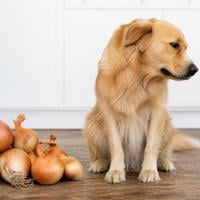
No — dogs must never eat onions. Onions are toxic to dogs in all forms — raw, cooked, dried, or powdered — and can cause a serious, potentially life-threatening condition called haemolytic anaemia. This applies to all members of the Allium family: onions, garlic, leeks, chives, and shallots are all dangerous to dogs.
If your dog has eaten onions, contact your vet immediately. This is a medical emergency.
Onions contain compounds called N-propyl disulphide and other organosulphur compounds. These compounds attack red blood cells in dogs, causing them to break down faster than the body can replace them — a condition called haemolytic anaemia. With fewer red blood cells available to carry oxygen around the body, dogs become weak, lethargic, and can go into organ failure in severe cases.
Crucially, the effects are cumulative. A small amount eaten once may not cause immediate obvious symptoms, but repeated small exposures can build up over time and still cause serious harm. Onion toxicity does not require a single large dose — it can develop gradually.
Many dog owners don't realise that the danger extends beyond raw onion:
Onion powder is particularly dangerous because it's found in many processed foods, stock cubes, gravies, sauces, baby food, and seasoning mixes. Always read ingredient labels before sharing any human food with your dog.
Symptoms may take several days to appear after ingestion. Watch for:
The delayed onset of symptoms means that by the time your dog appears ill, significant damage may already have occurred. If you know or suspect your dog has eaten onions, don't wait for symptoms — call your vet immediately.
Treatment may involve inducing vomiting (if very recent), activated charcoal, IV fluids, and in severe cases, blood transfusion.
Onion and onion-derived ingredients appear in many everyday foods that might seem harmless:
Never give your dog scraps from processed or seasoned food. The safest approach is to stick to dog-specific food and vet-approved treats.
Onions are not the only Allium to avoid. All plants in this family are toxic to dogs:
The best protection against accidental toxin ingestion is feeding your dog a dedicated, complete dog food rather than human food. Our grain-free dog food range contains no onion, garlic, or other harmful ingredients — just high-quality, natural ingredients your dog needs. If your dog has a sensitive digestive system, our sensitive stomach dog food provides gentle, complete nutrition.
As little as 5g of onion per kg of body weight can cause toxic effects. For a 10kg dog, that's just 50g of onion — roughly half a medium onion. However, because toxicity is cumulative, any amount should be considered concerning.
Yes — gram for gram, garlic is approximately 5 times more toxic to dogs than onion. Even small amounts of garlic should be treated as a serious concern.
Contact your vet right away, even if your dog seems fine. Tell them exactly what was eaten, how much, and when. The vet can advise on whether your dog needs to be seen immediately.
No. Spring onions belong to the Allium family and are just as toxic to dogs as regular onions.
Japanese breeds such as Akitas and Shiba Inus are known to be particularly sensitive to haemolytic anaemia caused by Allium ingestion. However, all breeds are at risk, and no dog should ever eat onion.
For a complete overview of what your dog can and can't eat safely, visit our Can Dogs Eat guide. You might also find these related guides helpful:
---
Protect your dog with food you can trust. Explore our full range of natural, additive-free grain-free dog food at essentialfoods.ie — because every Irish dog deserves the best.

As dogs age, their nutritional needs change significantly. This complete guide for Irish dog owners covers everything you need to know about feeding your senior dog in 2026 — from when to make the switch, to the best ingredients and formulas for joint health, digestive comfort, and healthy ageing.

Choosing the best puppy food in Ireland is one of the most important decisions you'll make as a new dog owner. This complete 2026 guide covers everything Irish puppy owners need to know — from nutritional requirements and feeding schedules to the difference between large and small breed formulas.
Kidney disease is one of the most common serious health conditions in older dogs. Learn the symptoms, stages, and how the right diet plays a critical role in slowing progression and improving quality of life.