Your Cart is Empty
As dogs grow older, their nutritional needs change significantly. A senior dog's metabolism slows, their joints bear years of wear, their kidney and liver function can reduce, and their ability to digest certain proteins or absorb certain nutrients may decline. The food that served them brilliantly as an active adult may not be the best choice in their later years.
At Essential Foods Ireland, our senior dog food range is formulated with these changes in mind. High-quality protein to maintain muscle mass. Controlled calorie density to prevent weight gain in less active dogs. Rich in omega-3 fatty acids to support joint mobility and cognitive health. And completely grain-free — because older dogs are, if anything, more prone to the digestive issues that grain fillers cause.
The answer depends largely on breed and size. Small dogs (under 10kg) typically enter their senior years around age 10–12. Medium breeds are generally considered senior from around age 8–10. Large and giant breeds age faster and may be considered senior from as young as 6–7 years. If your dog is slowing down, sleeping more, showing grey around the muzzle, or having occasional joint stiffness, it may be time to consider a senior-specific diet — regardless of their official age bracket.
The nutritional profile of a good senior dog food differs from adult food in several important ways:
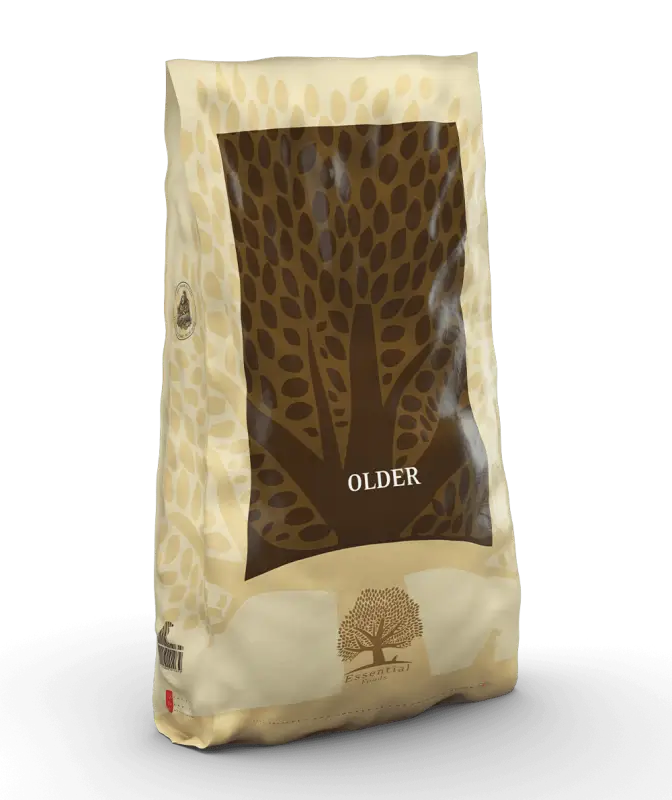
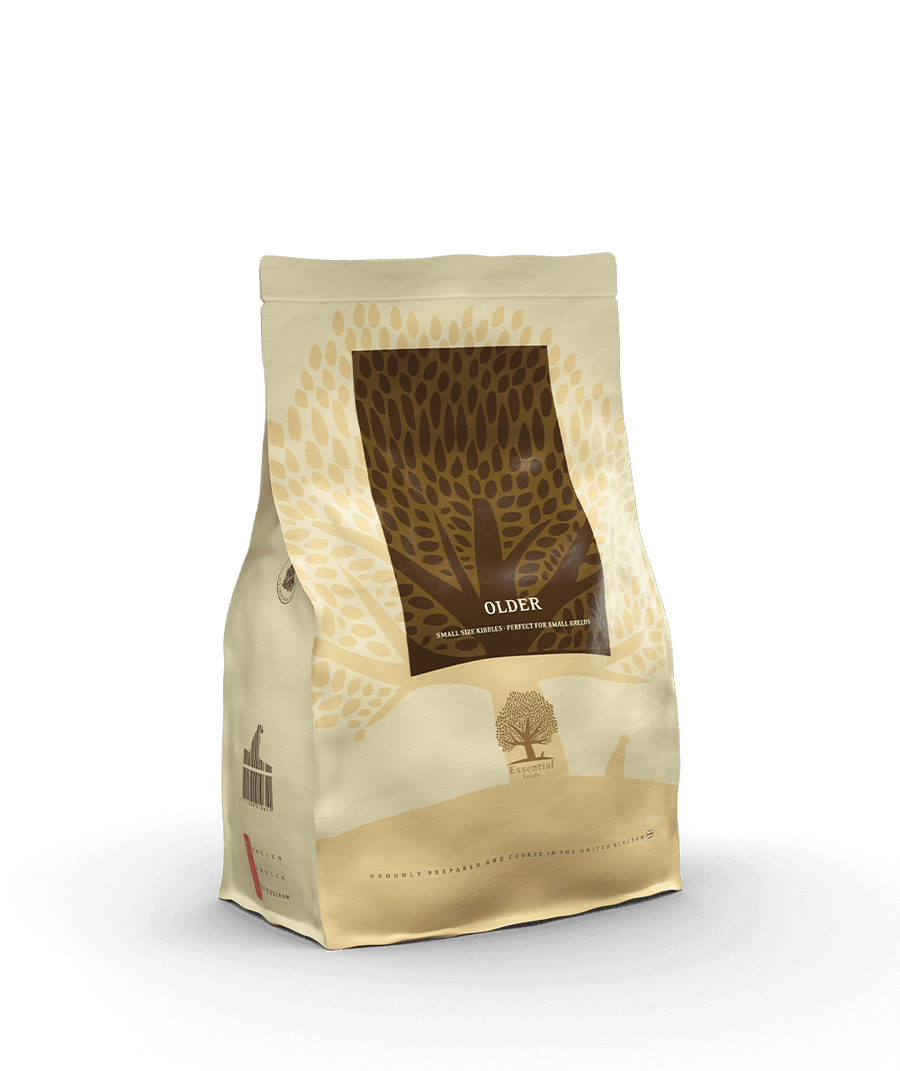
Essential Older (Dry Kibble) is our dedicated senior recipe — a grain-free formula made with 78% free-range British chicken, country duck, Scottish salmon and trout. It's lower in calories than our adult recipes but maintains high protein to support muscle mass. Available in 2.5kg and 10kg bags, with free delivery on 10kg orders.
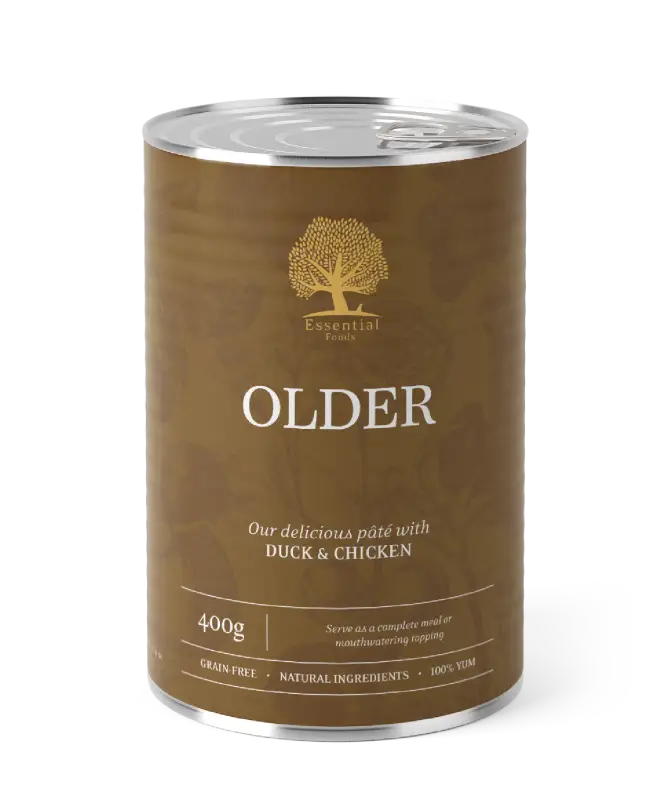
Essential Older Pâté is our wet food option for older dogs — ideal for dogs with dental issues or those who've lost interest in dry food. Made with duck and chicken in a soft, easy-to-eat format, it can be served as a standalone meal or mixed with dry food to add moisture and improve palatability.
For senior dogs with sensitive stomachs or fish protein preferences, our Nautical Living range (salmon and trout) is also an excellent choice — the omega-3 content is particularly high, supporting both joint health and cognitive function in ageing dogs.
Weight gain is common in senior dogs as activity levels reduce. Carrying excess weight significantly accelerates joint deterioration and puts extra strain on the heart and other organs. If your senior dog is overweight, our Contour recipe — a controlled-calorie formula — may be appropriate. Always consult your vet before making significant dietary changes, especially if your dog has existing health conditions.
When transitioning an older dog to a new food, do so gradually over 10–14 days. Senior dogs often have more sensitive digestive systems than younger dogs, and an abrupt change can cause loose stools and digestive upset. Start with 20% new food mixed with 80% of the existing food, and increase the ratio slowly over the transition period. If your dog shows signs of digestive upset, slow the transition further.
We deliver to every county in the Republic of Ireland and Northern Ireland. Our 10kg senior food bags qualify for free delivery. Orders placed before 2pm ship the same day, with most deliveries arriving within 1–2 working days. No subscription required.
A high-quality, grain-free food with named meat protein (not derivatives), controlled calorie density, and omega-3 fatty acids is ideal for older Irish dogs. Essential Foods' Older recipe (78% chicken, duck, salmon and trout) is formulated specifically for senior dogs and is available with fast delivery across Ireland. For dogs with dental issues, our Older Pâté is an excellent alternative.
No — the idea that senior dogs should eat low-protein diets is outdated. Unless a dog has diagnosed kidney disease requiring a veterinary prescription diet, senior dogs need adequate high-quality protein to maintain muscle mass. The key is the quality of protein, not the quantity: highly digestible named meat sources are far more beneficial than lower-grade derivatives.
Senior dogs typically need around 20–30% fewer calories than adult dogs at peak activity. Feeding guidelines on the pack are a starting point, but you should adjust based on your dog's weight and activity level. A senior dog who was eating 250g of adult food per day might do well on 180–200g of senior food. Monitor body condition regularly — you should be able to feel but not see the ribs.
Wet food can be particularly beneficial for senior dogs, especially those with dental pain or who have difficulty chewing hard kibble. The higher moisture content also supports kidney health. Many owners transition senior dogs to a mix of dry and wet food, using our Older Pâté as a daily topper to add hydration and palatability.
There is no single rule — it depends on breed, size and individual health status. As a general guide, large breeds from around 6–7 years, medium breeds from 8–10 years, and small breeds from 10–12 years. Signs that it's time to consider switching include weight gain, reduced activity, joint stiffness, and changes in digestion. Your vet can advise on the right timing for your individual dog.